
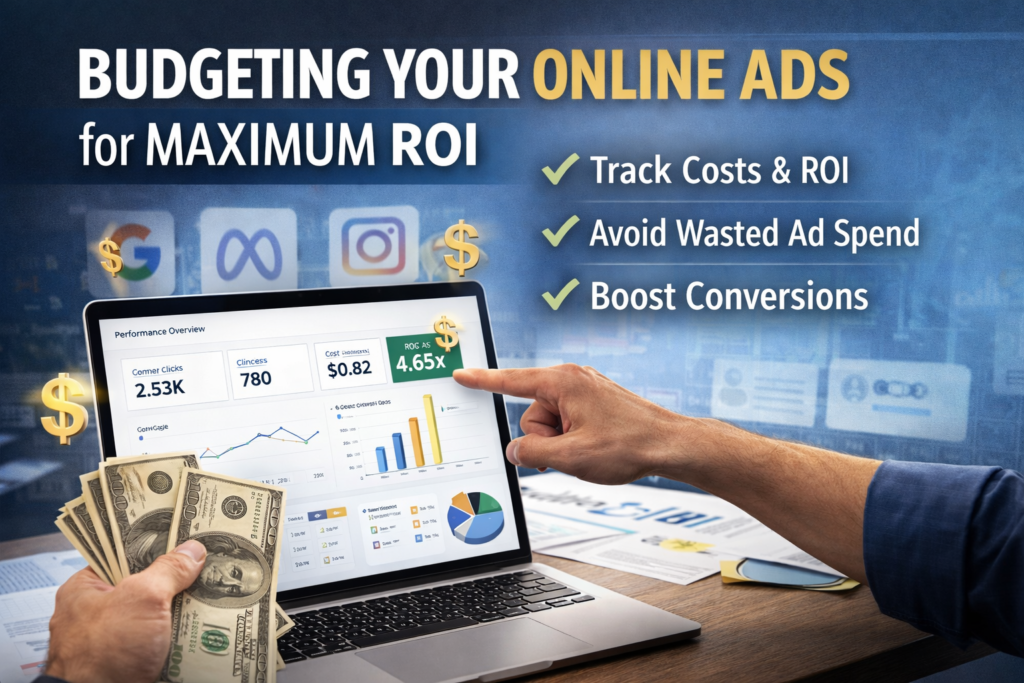
Running online ads without a clear budget strategy is like pouring water into a leaky bucket. You may get clicks and impressions, but without smart planning, your return on investment (ROI) will always fall short. Whether you’re advertising on Google, Meta, or other platforms, how you budget matters just as much as where you advertise.
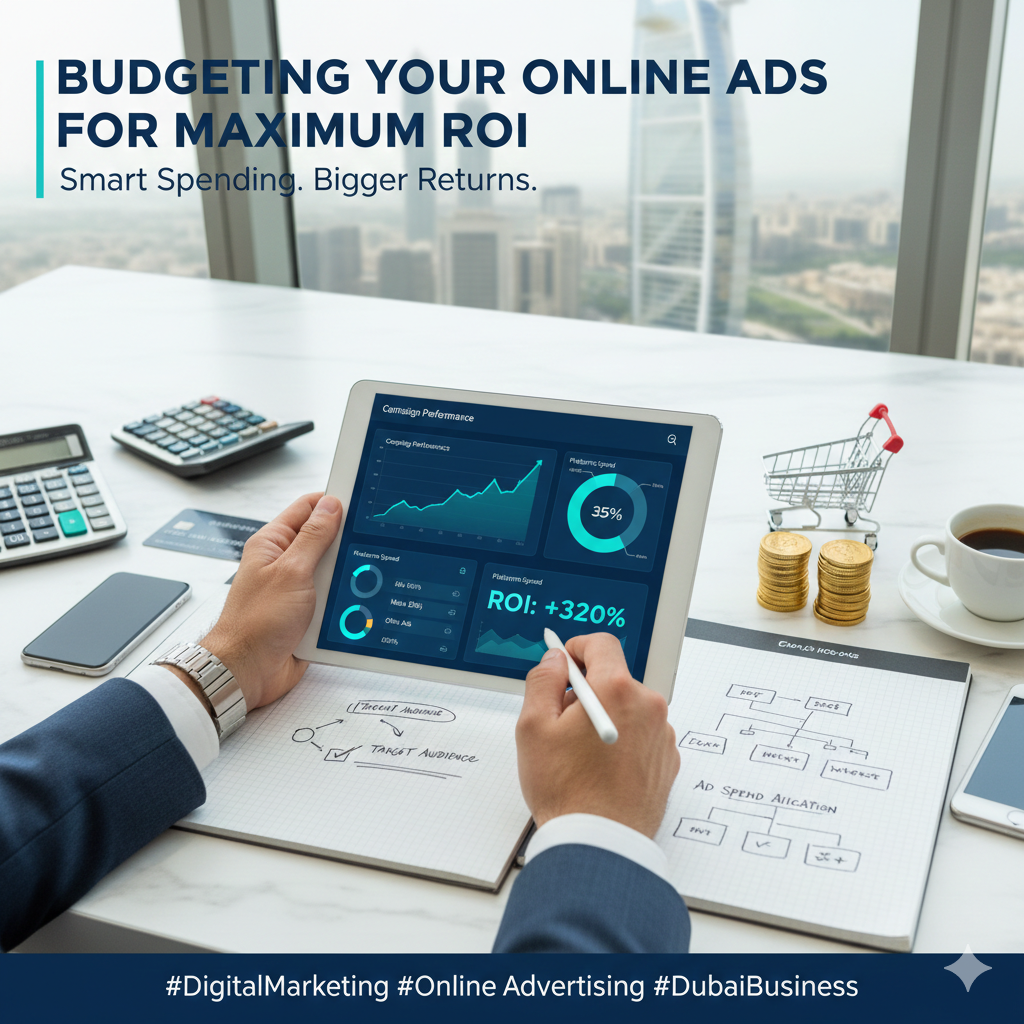
Here’s how to budget your online ads strategically to maximise ROI and avoid wasted spend.
1. Start With Clear Business Goals (Not Just a Budget)
Before deciding how much to spend, define what success looks like. Are you aiming for:
- More website leads?
- Online sales?
- App installs?
- Brand awareness?
Each goal requires a different budget structure and performance metric. For example, lead generation focuses on cost per lead, while e-commerce prioritises return on ad spend (ROAS).
Tip: Never set a budget without defining the outcome you expect.
2. Understand Your Cost Benchmarks
Every industry has different advertising costs. Knowing your average:
- Cost per click (CPC)
- Cost per lead (CPL)
- Conversion rate
…helps you estimate how much budget you actually need to reach your goals.
Example:
If your average CPL is AED 80 and your target is 100 leads, your minimum ad budget should be around AED 8,000—excluding testing.
3. Allocate Budget for Testing First
One of the biggest mistakes advertisers make is expecting instant ROI. The first phase of any ad campaign should be testing and data collection.
Set aside:
- 20–30% of your budget for testing audiences
- Multiple creatives and ad formats
- Different bidding strategies
Once winners are identified, shift budget toward what performs best.
4. Focus on High-Intent Campaigns
Not all campaigns deserve equal spend. To maximise ROI, prioritise high-intent audiences—people actively searching or showing strong buying signals.
High-ROI campaign types include:
- Google Search ads
- Remarketing campaigns
- Lookalike audiences based on conversions
Brand awareness ads are valuable but should take a smaller share unless brand growth is your primary objective.
5. Daily Budget vs Lifetime Budget: Choose Wisely
Choosing the right budget type helps control performance:
- Daily budgets are ideal for consistent lead flow and optimisation.
- Lifetime budgets work better for fixed-duration promotions or events.
For ongoing campaigns, daily budgets offer more control and easier scaling.
6. Track the Right Metrics (Not Vanity Numbers)
Impressions and clicks don’t pay the bills—conversions do. To maximise ROI, focus on:
- Cost per acquisition (CPA)
- Conversion rate
- ROAS
- Lead quality, not just quantity
Ensure conversion tracking is set up correctly across platforms and your website.
7. Scale What Works, Pause What Doesn’t
Once you identify high-performing ads:
- Increase budget gradually (10–20% at a time)
- Avoid sudden spikes that reset learning phases
- Pause underperforming ads quickly
Smart scaling is about discipline, not emotion.
8. Don’t Forget the Landing Page
Even the best-budgeted ad will fail if the landing page is weak. A slow website, unclear messaging, or complicated forms can destroy ROI.
Optimise your landing page for:
- Speed
- Clear call-to-action
- Mobile experience
- Trust signals (reviews, badges, guarantees)
Often, improving the landing page delivers better ROI than increasing ad spend.
Final Thoughts
Maximising ROI from online ads isn’t about spending more—it’s about spending smarter. With clear goals, realistic benchmarks, consistent testing, and strong tracking, your ad budget becomes an investment rather than an expense.