
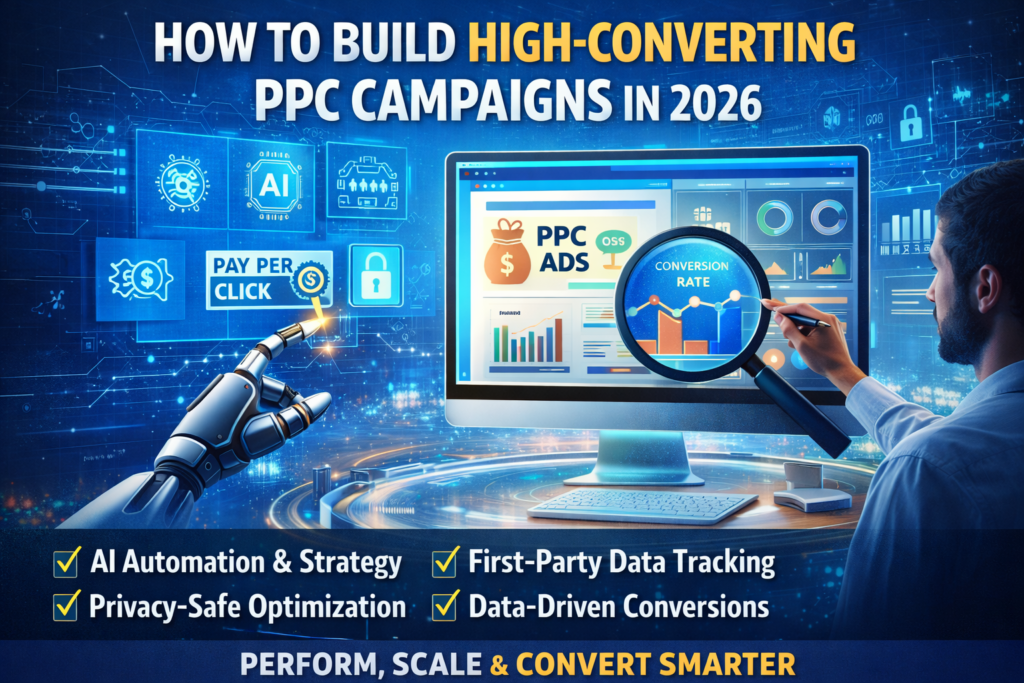
Pay-Per-Click (PPC) advertising in 2026 is smarter, faster, and more competitive than ever. With AI-driven platforms, privacy-first tracking, and rising ad costs, running PPC ads is no longer about just bidding on keywords — it’s about strategy, data, and user intent.
If you want high-converting PPC campaigns in 2026, you must adapt to how users search, how platforms optimize, and how conversions truly happen.
1. Start With Intent-Driven Keyword Strategy
In 2026, intent matters more than volume.
Instead of targeting broad keywords, focus on:
- High-intent commercial keywords
- Long-tail and conversational search terms
- Problem-solution queries
Example:
❌ “digital marketing”
✅ “digital marketing agency for real estate in Dubai”
Use AI-powered keyword clustering tools and Google Search Console insights to group keywords by buyer intent.
2. Leverage AI, But Don’t Rely on It Blindly
Platforms like Google Ads and Meta Ads now heavily rely on AI:
- Smart bidding
- Performance Max campaigns
- Automated audience targeting
Best practice in 2026:
Let AI optimize delivery, but you control strategy.
✔ Set clear conversion goals
✔ Exclude low-quality placements
✔ Regularly audit search terms and performance
Human oversight remains the difference between profit and wasted spend.
3. Craft Hyper-Personalized Ad Copy
Generic ads no longer convert.
High-converting PPC ads in 2026:
- Speak directly to the user’s pain point
- Use dynamic keyword insertion wisely
- Highlight clear outcomes, not features
Winning PPC Copy Formula:
Problem → Solution → Proof → CTA
Example:
“Struggling to Generate Leads? Our AI-Driven PPC Campaigns Deliver 3× ROI. Get a Free Strategy Call.”
4. Optimize for Conversion, Not Clicks
Clicks don’t pay bills — conversions do.
Ensure:
- Fast-loading landing pages (Core Web Vitals compliant)
- One clear CTA per page
- Mobile-first design
- Trust signals (reviews, certifications, case studies)
In 2026, users decide in under 5 seconds whether to convert.
5. Use First-Party Data & Privacy-Safe Tracking
With cookies fading and privacy laws tightening:
- First-party data is gold
- Server-side tracking is essential
- CRM and PPC integration improves accuracy
Connect:
- Google Ads + GA4
- Meta Ads + CRM
- Offline conversions + lead quality tracking
This helps AI optimize for real revenue, not fake leads.
6. Advanced Audience Targeting Is a Must
High-converting PPC campaigns use layered targeting:
- Custom intent audiences
- Lookalike audiences (updated with first-party data)
- In-market & lifecycle targeting
In 2026, successful advertisers build full-funnel campaigns:
- Awareness → Consideration → Conversion → Retargeting
7. Continuous A/B Testing Is Non-Negotiable
Winning campaigns are never static.
Test regularly:
- Headlines & CTAs
- Ad formats (video, responsive search, display)
- Landing page layouts
- Offer positioning
Even a 5–10% improvement can dramatically reduce cost per acquisition (CPA).
8. Budget Smarter, Not Bigger
Throwing money at ads doesn’t guarantee results.
High-ROI PPC campaigns:
- Allocate budget based on performance data
- Pause underperforming keywords quickly
- Scale only proven campaigns
In 2026, efficiency beats scale.
9. Track What Actually Matters
Forget vanity metrics.
Focus on:
- Cost per qualified lead
- Conversion value
- Return on ad spend (ROAS)
- Lead-to-customer conversion rate
Align PPC reporting with business goals, not just ad dashboards.
Final Thoughts
Building high-converting PPC campaigns in 2026 requires the perfect balance of AI automation, strategic thinking, strong creatives, and data-driven optimization.